Saturday, April 20, 2013

Eating and Cooking: Simplified and “Healthified”

Back in my “Cooking and Happiness” post, I mentioned that I wanted to find ways to make cooking less of a relentless chore and more of a pleasure. While taking some of the stress out of the plan-shop-cook-eat process, I also wanted ideas that would reduce the guilt; I wanted to feel good about what I was eating without reinventing my life to do so. And, thanks to various sources of inspiration, here’s what I’ve discovered so far. It boils down to 3 basic ideas.

1. Have lots of vegetables, fruits, and other whole foods on hand.
Having healthy stuff on hand is only part of the solution, but it is a completely essential part. Picking up a bountiful basket (5 fruits and 5 vegetables, see bountifulbaskets.org) at the beginning of each week has been a fun and economical way to get more fruits and vegetables into our house. It’s also helped me branch out and try new foods and new recipes (brussel sprouts in a black pepper sauce, anyone? roasted persimmons?). Another breakthrough has been having David pick up produce on his way home from work (especially now that it’s getting warm enough for him to easily swing by Lee’s Marketplace on his bike). Sending him on a quick produce run after Peter is in bed also works well. Dave tends to shop quickly, stick to the list, and avoid temptation food. Another recent practice that has dramatically increased our intake of whole foods has been keeping the freezer well-stocked with frozen fruit.

2. Actually eat the whole foods that we do have on hand.
Having a bunch of good stuff in the fridge is no guarantee that it will be eaten, so having a simplified and flexible repertoire of breakfast, lunch, and dinner recipes has been a big deal for me. Basically, I ‘m trying to eat fruit and whole grains for breakfast (usually a simple combination of frozen blueberries with oatmeal that gets thrown in the microwave or a slice of toast with a piece of fruit). For lunch, a salad or veggie tray or a smoothie with something legume-based on the side (e.g. hummus and pita, bean burgers, a lentil stew). And then a vegetable stir-fry or vegetable soup or some other cooked vegetable type dish for dinner. Of course there is a ton of flexibility in here -especially with dinner- but that’s the basic plan. Don’t get me wrong, I still want to make creamy pasta dishes and juicy roasts (on special occasions) and a whole slew of other adventurous –and sometimes calorie-ridden- dinner recipes, but stir-frying up some vegies with rice make a great “every-day” sort of plan. Having a simple and versatile list of sauces and glazes that can mix-and-match with various vegies is a big help. I’m also collecting favorite recipes in a file in Word so that I can quickly search my list by ingredients (e.g. search “mushrooms”). I’m hoping this will also help with eating things in-season (i.e. buying the produce as it comes into season at the local gardeners’ market and then coming home and figuring out what to do with it.)
Another key piece of this puzzle is finding the time and energy to prep the food. Stir-fries and stews may be easy and versatile, but there is still going to be quite a bit of rinsing, peeling and chopping involved. Putting a salad or mini salad bar together can be especially time-intensive. What’s been working for us has been making a big salad right after coming home from the grocery store and then eating it with lunch throughout the week. I, personally, also do better when I can get things chopped and washed during the first part of the day as I tend to lose motivation in the later part of the afternoon. Dave loves coming home with everything laid out in bowls and ready for him to cook. By the way, heavily enlisting my spouse in this whole process (or maybe he has been enlisting me) has probably been the real reason that any of this has worked.

I also really like the system that my in-laws have developed; on Saturdays, they pick up their bountiful basket of produce, look through some cookbooks on the spot in order to plan a couple of meals based on the basket’s contents, head to the grocery store to fill in the missing ingredients, and then go home to do most of the prep for the following week (i.e. getting the veggies washed, chopped, and stored for the salad bar and for other upcoming meals. It makes for a long morning but also for easy, healthy eating during the remainder of the week.

3. Limit the “goodies.”
This one really goes back to the idea of what foods you have on hand. If peanut butter M&Ms are on the counter, you can bet I’ll be eating those for lunch no matter how many shiny pieces of fruit are sitting nearby. I’ve realized that this idea of pushing out “the bad” by filling up the empty spaces with “the good” has many implications beyond food. But for me with regard to eating it was fairly simple: 1) having healthy snacks on hand and 2) admitting that I am weak when it comes to chocolate (among other things) and having Dave hide the goodies (yes, including the chocolate chips intended for baking). I didn’t want to go without it, but I also didn’t want to get to the end of the day and realize I’d consumed a large bag of chocolate-covered raisins (and not much of anything else). This way, I can look forward to a treat at the end of the day, but I have a better idea of how much of it I’m eating. This plan of attack wouldn’t work for everyone –and it’s not without its drawbacks- but, hey, it works surprisingly well for me. Also, buying things in smaller portions -especially ice cream, which can’t really be hidden in the freezer- helps a great deal (it may not be even close to the best value in terms of price per once, but I sure value the end result of not feeling sick and guilty when the carton is empty).

Whew! So that’s the gist of it –with more details to follow in future posts. This is not a list of rules (or at least I keep telling myself that) but, rather, a list of principles. There’s no “all or nothing” about it. Whenever I’m able to increase the overall proportion of whole and healthy foods in my diet (even if it’s just by a little bit on some days or not at all on others), I win. How’s that for simplified and “healthified”? 

Friday, February 15, 2013

Going Somewhat Vegetarian: Or, How We Mostly Stopped Buying Meat

To be clear (if the title of this post wasn't enough), we have not gone vegetarian. This week, we did the lunch buffet at the Indian Oven where I ate more Chicken Curry in one sitting than anyone ever should, vegetarian or no. The week before that, we got big, meaty subs from Logan's Heroes. And the week before that, we did pick up the Gourmet Vegetarian pizza from Papa Murpheys (but that's just because it's their best pizza -really, try it). That being said, I cannot remember the last time I bought meat at the grocery store (with the exception of two organic chicken breasts that we paid $10 for and served to some company).

It happened gradually. I was actually going to title this post, “Taking the Plunge” or something exciting like that, but it's really been more like taking a ride on a long, gently sloping slide (which didn't make for nearly as good of a title). It had a lot to do with the Cache Valley Gardener's Market ending in the fall -where we had been buying local meat that had been raised in a more humane -not to mention in a more environmentally-friendly- manner. Once it ended, we kept holding off on buying meat until we could find a seller we'd feel good about. And maybe that's all it took. Just a few weeks of not buying meat. I'd find myself wandering through the meat section thinking, “Well, we've been fine without it for this long...” Maybe it was Dave getting this disappointed look on his face when I said I'd planned meatloaf for dinner. Maybe it was just one Netflix food documentary too many (you know how Netflix does this thing?: “Because you watch Food Inc. here are a zillion other distressing food documentaries that you need to watch!”)

Like I mentioned before, I do often order meat at restaurants. I also eat meat that others have prepared (like at a ward party or when eating with friends or family). I just don't feel much desire to buy the stuff anymore. I still wonder what the point of it all is. I mean, why go half-way? What kind of mixed messages I am trying to send? (As you can tell, this is still a bit of a moral dilemma that I like to ponder on occasionally). Well, there are a few reasons. For one, I know myself and the limits of my own willpower all too well; I think if I were to quit eating meat entirely I would probably go nutsy and splurge in other terrible ways. Also, despite what any vegan will tell you, I believe that meat does in fact have some important nutritional value. That being said, I don't think we need to eat it every day (thank you “Word of Wisdom” for clearing that up). What's more, I am discovering that many meals are fine -if not better- without it. I suppose that the most fundamental reason why I am not a vegetarian is that I don't believe that man eating beasts is inherently wrong (again, thank you “Word of Wisdom”). I could be called a “speciesist” for saying that, and I suppose I am. So be it.

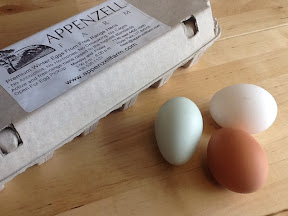
And there's another important reason: convenience and “do-ability.” That might sound a bit on the selfish side, but I'm very aware that many people simply don't have the resources or the time to go to the lengths that Dave and I have gone to. They can't spend 30 minutes driving across the valley to buy local, free range eggs. They can't pay $30+ dollars for a roast at the farmer's market. What's more, they may have a picky spouse or child and are just doing their best to get something edible on the table. Basically, it is hard to eat healthy –let only to eat conscientiously in our society. No one has unlimited resources, and Dave and I are no exception. (For example, we couldn't really afford to buy organic on everything, and we rarely do buy organic -partly because we got disillusioned after reading, The Omnivore's Dilemma). But, I figure this is at least something I can do. And I like to hope that a lot of little somethings will eventually add up to...well, something more.


Friday, February 8, 2013

A Follow-up And a Rant

The “follow-up” portion of this post will be very brief (I can already sense your collective sigh of relief!). Basically it is just to say that I am increasingly respecting both sides of this particular debate (well, except for the NRA's complete refusal to budge -I have zero respect for that), and I am increasingly appreciating the complexity of this issue. Objective, fact-ridden articles such as this one http://www.theatlantic.com/national/archive/2013/02/gun-violence-in-america-the-13-key-questions-with-13-concise-answers/272727/
have been especially good at helping me see the “bigger picture” and ask the important questions. Questions such as: Would lowering total gun violence necessarily lower the incidence of mass shootings? How do we close the “private sales background check” loophole? Would banning assault weapons even be effective at this point (considering how many are already in circulation)? What would be effective and how do we access this type of data? You get the idea. Complex stuff.

So, on to the rant (I hope you are as excited as I am). While I've grown in respect for those arguing gun rights, I am more and more bothered by posts such as this one: 


or this one:  


or this one: 


or even this one:


(Disclaimer: if it was you, dear reader, who posted these memes, please do not take this as a personal attack. I am going after the meme here -not the meme-poster)

If someone can explain to me the redeeming value of these types of politically-charged memes, please do. I can certainly see purpose, but I wouldn't call it “redeeming.” I can see how they serve to “fire-up the base.” I can see how they lead to mob-think mentality and an added certainty that your chosen group is right because they are very good at pushing emotional buttons while ignoring considerations such as reason and civility.

So, let's take the first one. Let's assume that all the numbers are accurate (which I didn't check, but I would hope the person who posted it had). Even if accurate, the figures lead to a very distorted take-home message. There's a quote I recently came across that really hit home with me: “Figures don't lie, but liars figure.” Like I've said before, if someone is of the opinion that our efforts are misdirected in going after gun control –that there are much more effective ways to save the greatest number of American lives, I would respect that opinion. I would love to discuss it. Clearly though, that is not the take-home message of this particular internet meme; rather, it seems to be to trivialize the negative effects of gun violence on our society in a most insensitive manner. What do these numbers mean to someone who has lost a loved one in a senseless act of gun-violence? How can a figure, like the one presented here, begin to account for the toll that tragedies like Sandy Hook take on our National morale?

I'm discovering that what really bothers me about political memes isn't so much what is said, but all the things that are left unsaid --the second meme being my case-in-point. It conveniently looks over the profound differences in nature that exist between a car and a gun (e.g. a car was invented to transport people from point A to point B, a gun was invented to hunt and kill), the profoundly different ways their misuse as well as their appropriate use affects society, and the profoundly different ways we potentially deal with each problem. It also jumps to the conclusion that guns will be completely taken away, when, so far anyway, I haven't heard any politician putting that idea forward. But none of that matters because it accomplishes what it was meant to accomplish; it pushes on all the right emotional hot-spots.

Even the third meme, which I find least offensive, still gives me some pause. I appreciate the comparison it is making (really, I do), but as you follow this comparison further, some important differences become apparent. Like the idea that increasing the availability of fire extinguishers, as opposed to guns, isn't going to increase the likelihood of more fires occurring (i.e. the need for the fire extinguisher in the first place).

And the last meme. It really seems innocent enough. But think of how easy it would be to find some contradictory statement from a different general authority (or even from the same general authority) given at a different place and time and to then use that quote to “challenge” the first quote. I also don't like quotes like this being taken out of context without the whole background being given. Mostly, I just don't like seeing our general authorities being paraded around on facebook like puppets being made to support this or that political opinion (I know that sounds harsh. Does anyone else feel this way?) Sharing quotes by general authorities to bare testimony or to uplift others seems like a different matter entirely.

Before I sign-out, it's confession time. Amid all this meme-angst, I actually sought out a pro-gun control meme. I wanted to make a statement. I wanted to “fight back.” And I had a very specific meme in mind. It was going to be The Doctor (from BBC's Doctor Who) looking totally awesome, saving planets right and left, feared by villains throughout time and space, and armed with only a humble sonic-screwdriver. There would also be some pithy quote or text to drive the message home. I'd like to say it never got posted to my wall because I saw the error of my ways. Because I realized the hypocrisy. Because I didn't want to add to the meme-induced idiocy. I'd like to say that, but it wouldn't be true. It never got posted because I couldn't find one out there, and I lacked the ambition and know-how to make one myself. And yet, as I type this, I am starting to see some value in the memes that increasingly fill our social-media world. As long as we don't view any particular meme as an end in and of itself. As long as we view it has a starting point -as a springboard into deeper waters.    

Thursday, January 31, 2013

Feminism, Freedom, and Gun Control, Oh My!


The title of this post is a pun on “Lions and tigers and bears, oh my!” from the Wizard of Oz because I feel like I am tackling a lot of big scary things with this post. Things I've been thinking a lot about -and things I have a lot more thinking about to do. My opinions tend to evolve, and there is always more to learn about any issue. So, please feel welcome to comment. This post started as a comment to a friend's post, so I've left it in that format. Obviously, it got way too long to post as comment though. :)


ON FEMINISM
So, (deep breath) here some of the thoughts I had while reading your post. I loved what you said about womanhood -particularly, “What we should be fighting for as women is mutual respect, and dignity in what we are and choose to be.” This has so many wonderful implications. I also couldn't help thinking of the “wear pants to church” thing that happened in December. I think a lot of people mistook what that was actually about for many of the women who participated. For me, (although I missed church that day) it would have been about a lot of things, but it would NOT have been about trying to take over Priesthood responsibilities. It would NOT have been about trying to prove that men and women are the same or have been given the same responsibilities from God. It would have been about helping women find a voice who feel like they have lost theirs in the church's male hierarchy -particularly women who may have been wronged or ignored by a priesthood holder in the past. It would have been about admitting that these things happen and that members of the church (even our own priesthood leaders) are not always perfect. It would have been about helping women with doubts (or women who disagree with certain statements or opinions from the general authorities – from the past or present) find support and love and an answer that “it is okay to have questions and to disagree with certain things –it does NOT mean that you are a heretic who needs to leave the church.” It would have been about opening a discussion about ways our “mormon culture” -particularly in Utah- could be improved to be more inclusive -more understanding. More willing to listen.

I think the idea that men and women should be the same and should fulfill the same roles in the same ways has been an enemy to feminism. I loved this article called Why Women Still Can't Have It All written by Anne-Marie Slaughter http://www.theatlantic.com/magazine/archive/2012/07/why-women-still-cant-have-it-all/309020/ She talked about trying to balance motherhood with a high-power, government job. Because the job was so un-family-friendly, she ended up switching to a less prestigious position in order to spend more time with her teenage sons who needed her. It made me sad, because she is just the type of responsible, family-oriented person that I would want in government. It made me sad because I wish there were more female voices in government, but, since the current male-dominated system dictates that women should fill these positions in the same manner that men do (i.e. long hours, long commute, little flexibility), women are often pushed out. Do you see what I mean? Maybe there are some implications here for the article that you read about women serving in the military. Maybe there are ways for women to get involved -to play an equal part- without being drafted. Ways that would be more workable for them -more suited to their responsibilities and natures. After all, isn't that what happened during the last great wars? Women kept things running at home and cared for the injured. That said, if a woman wants to fight in the army -or be a general in the army, for that matter- I say that she should. And I think there are things we could do as a society to make that career choice an easier one for her -starting by giving her the same level of respect while acknowledging that she may do things differently or have different demands placed upon her than a man in that same position would. Some people would say this is an anti-feminism thing to say. In that case, their breed of feminism isn't the same as mine.

FREEDOM AS IT RELATES TO GUN CONTROL
So, to switch topics, back to the second half of your post about gun control. (Another deep breath). The main thing that your post made me think about was this very important idea of “choice.” I think this idea gets over-simplified at times. The way I see it, it is not just either “we either choose to let you have a gun” or “we take your choice away by taking your gun.” I think there is so much “gray area” between those two extremes. For instance, when a new tax comes into effect, you no longer get to “choose” what to do with that money. However, you do “choose” to live in America, you do get to “choose” your representatives in government and you hope that their choice (that the tax is necessary or worthwhile) would also represent your choice and would be in the best interest of our society. Our representative government chooses, and then it becomes law. That's the pattern. For example, we chose that we would not tolerate the negative affects of drugs on our society and, therefore, we cannot use certain drugs legally or must have a prescription to use others. New gun legislation would fit this same pattern. We determine that we will not tolerate the negative affects of guns -or certain types of guns- on our society, and we create new legislation. It probably wouldn't be, “you cannot choose to have a gun” but, “if you choose to have a gun, you must undergo regular background checks, pay a gun-tax, or some other regulation." Is this a breach of freedom and choice? I would say yes. But so are many other things. I cannot “choose” to drive without a license. I cannot “choose” to go 100 mph on the interstate. I cannot “choose” to go through airport without getting the full body pat-down. And, as an extreme example, a young man cannot “choose” to ignore the draft.

I sympathize with the “Ron Paul” view of less government = more freedom because I think it is true in the purest sense of the word “freedom.” But I don't want to live in that country. And I am confused when some breaches of freedom (e.g. our taxes paying for public education) seem so much more acceptable than other would-be breaches of freedom (e.g. our taxes paying for public healthcare) when they both happen by this same democratic process. We determine the level of violence we will tolerate, the level of inequality or injustice that we will tolerate, the level of abuses among the easily victimized that we will tolerate, and we act. You could say we are trading certain freedoms, yes, but isn't this the nature of civilization? We try to elevate our society. We try to preserve it. I do not believe that a free-market system, left unchecked, would accomplish this. You could argue that our current system is not accomplishing this either. I respect that opinion. I also respect the opinion that more free-market, less government/less regulation would be for the best. What concerns me is when these opinions and judgments seem to be made primarily along along party-lines -rather than through careful reason and thought. If someone believes that paying more taxes/going into more national debt is worth it in order to build an enormous national military but not worth it in order to help fund college educations, they should be able to explain why. They should really think about why it is worth trading freedoms in one instance and not in the other.

Because I am in favor of stricter gun regulation, does not at all mean that I am not concerned about freedom. I am very concerned about our freedoms. I am concerned that our very democratic process is under threat from the extremely influential, often extremely wealthy, powers that be. I think it is fascinating that there is so much discussion of freedom as it it relates to gun control, but hardly any as it relates Citizens United, a Supreme Court ruling that allows for limitless, anonymous campaign financing. When our elected officials are beholden to those who financed their campaign, what kinds of decisions do we think they are going to make once in office? The amount of money you have seems to increasingly determine the amount of influence that you have in our current political system. I am very concerned with how this affects our democracy and our freedoms. I see the downfall of America stemming from this type of corruption, greed, and arrogance.

MORE ON GUN CONTROL
But back to gun control. I also think there is a fundamental difference between telling someone whether or not they have the right to carry a gun versus whether or not they have a right to be feminine. Both are rights, but carrying a gun is a much heavier right. It's a lot like having a driver's license. If someone's vision is inadequate or they have a history of x-number of past offenses, they can't carry a license to drive. If someone's mental health is inadequate or they have a criminal record, they can't carry a gun. Some responsibilities and rights seem to need to be regulated. I guess you could argue that carrying a gun is a right whereas carrying a driver's license is a privilege...but that just seems backwards to me.

I think you brought up some other really great points. I also don't believe that stricter regulation will stop the violence. But I do hope that such laws would decrease it. Of course the die-hard criminals will still commit horrific and violent crimes, but it seems to me that we should at least make it harder for them to do so. There are not many weapons that will kill people as rapidly or as effectively as an assault rifle. The Oklahoma bomber was very effective at killing a lot of people, be he expended great resources to do so. He had to create the bomb (not an entirely easy thing to do since dynamite is illegal) and then I believe he also tested it in advance. Now, contrast that with the Virginia Tech shooter. He opened a couple of credit card accounts that were being promoted on-campus (each with a $500 dollar credit limit), bought the assault weapon and a bunch of ammo, and stated shooting. It doesn't seem like the current system could have made it much easier for him than that. Maybe he would have gone to great lengths to obtain a powerful weapon even if we had better regulation in place, but maybe not. Maybe he simply wouldn't have had the resources, perseverance, or intelligence to do so without getting caught. The likelihood of him having been able to commit a crime of that magnitude with better gun regulation in place almost certainly goes down. I think this same logic applies in situations where the crime is not premeditated. If two guys start fighting in a bar, someone is likely to get hurt. Tables, glasses, even knives may be thrown. But the likelihood of fatalities occurring from this fight (to those fighting and to the bystanders) is much lower if guns are not involved. I also think suicide rates go down in countries with fewer guns for this reason. People who try to over-dose are often unsuccessful. Guns are very effective at what they do.

How we protect ourselves is an important question. In many instances, there are other ways to be protected. In an up-close attack, I would think that pepper spray would be pretty effective. Better home security systems probably help a great deal against intruders. Against the government...well, all I can say about that is that the government currently has some pretty impressive weapons on their side... Also, I seriously question the gun wielder’s judgment when it comes to declaring what actually constitutes tyranny. But still, what do we do when a criminal has a gun (because it will still inevitably happen, no matter how strict the regulation)? It is an important question and not easily answered. I just don't think we solve the problem of guns with more guns. After all, isn't that the situation we currently have in America (i.e. TONS of guns and ammo in circulation)? It doesn't seem to be working.

I also wonder about the need for guns in a post-apocalyptic scenario. And I also need to think about the Mexico issue that you bring up.

I agree with you when you say that what the world needs most is people making little choices every day to do the right thing. For most of us (myself included), I think that's where our lives have the greatest impact. But I also think the world needs its “movers and the shakers” -the suffragettes and abolitionists of yesterday. Where would we be without them? We recently watched the PBS series called The Abolitionists, and I was very impressed with it. William Lloyd Garrison preached and practiced pacifism, but he never stopped sharing his voice. He never stopped printing and speaking out against slavery. Many people from his time thought he was a radical -an extremest- and frowned upon his outspokenness -even those who were anti-slavery in their hearts. And yet, his influence in ending slavery is too great to measure. My point is, I think there is something in many people that reflexively dislikes “activism” and I think we should be wary of that attitude. 


Monday, December 17, 2012

Cooking and Happiness

 Looking back over my original “Exploring Happiness” post, this topic would certainly fit with “Exploring Interests" -particularly as I've experienced cooking as a source of as well as an obstacle to happiness. I can't say just how long this cooking post has been "stewing" in my brain, but it's been a while.

I got really into cooking this past summer. There was the wonderful Farmers Market, the higher energy levels that summer weather seems to bring, the fact that Peter was sleeping through the night pretty well during those months (see "Sleep Deprivation Revisited" post), but, most of all, there was this book: Sear, Sauce and Serve by Tony Rosenfeld:


This is my favorite cookbook to date. I liked everything about this cookbook: the mix-and-match philosophy, the author's quirky tips and personal experiences, the exotic “feel” to many of the recipes, and the relative ease with which I could obtain the ingredients and make them. A gift from my mother-in-law, I read it cover-to-cover (who does that with a cookbook?). I looked and re-looked over the recipes, meal-planed almost exclusively from its pages, and even made copious notes in the margins. I was on a roll. The “searing” was working, the “sauces” were delicious, and the “serving” with a starchy side was taking our meals to photograph-worthy status. Here are a couple of meals made during this golden period of cooking:


“To everything there is a season” and that certainly held true here. As my excitement over cooking waned and my freezer increasingly filled with frozen pot pies, I started to wonder what had happened. I had been ready to write “cooking” in glowing letters on my list of interests, and, while I wasn't ready to strike it off completely yet, could someone who'd now hardly cooked a home-made meal in weeks really put it on her list of happiness-inducing hobbies? I think so. Here's why.

Isn't almost any interest or hobby a mixed bag? For instance, I love deciding what pictures and decorative papers will look good together on a scrapbook page, and, even more, I enjoy the finished outcome, but I don't particularly enjoy the tedious cutting and gluing or the ache in my back that follows. I like writing and blogging and seeing my written words on the page, but I'll admit that I enjoy starting the post so much more than finishing it.

You get the idea. Now back to cooking. I can't think of anything more fulfilling at a more basic level than feeding yourself and your family. And the sensory delights abound. It's an activity that's got all 5 senses pretty well covered. I love the sizzle when the meat hits the pan, the fresh smell of cilantro or ginger as you chop it, the bright smoothness of a red bell pepper...and we haven't even got to "taste" yet. The downside? Well, most obviously, there's the mess (the universal bane of home cooks everywhere), the times the meal completely flops (which seems to happen more often than you'd expect in my case -when will I learn to stop trusting Indian recipes with their suggested green chili amounts?), all the burning/under-cooking/forgetting-to-get-the-rice-in-the-rice-cooker-soon-enough drama, and, perhaps worst of all, the general sense of disappointment and waste when something just doesn't turn out as well as you'd have expected -in the absence of any obvious cooking faux paux. I just found this quote from the introduction of The Smitten Kitchen Cookbook by Deb Perelman and had to include it here: "I've noticed the nobody hates cooking as much as they hate the roulette of not knowing if their time, money, and efforts are going to be rewarded by a recipe that exceeds expectations. And I'm no different..."  For me, it's especially bad when I attempt to replicate a dish that someone has served me in the past (e.g. “But I remember your mother's chicken and rice tasting so much better than this”). I also get bogged down with meal planning. Does this sound familiar do anyone?: “I've planned like three whole meals already...isn't that enough for the month?”

It would seem that cooking is indeed a "mixed bag" of good and bad experiences. And yet, looking at cooking -or any other interest for that matter- through the "mixed bag" framework doesn't make a lot of sense to me. After all, are there any activities that I enjoy in their entirety -not to mention 100% of the time? Maybe a healthy dose of realism and perspective is in order. But it's more than that. I don't want to view the bad things in the "cooking bag" as, well, bad. After all, we often learn the most from our failures. Or at least I think we could. I think I could (despite being downright crumby at it  now). In fact, I think that learning to do so is absolutely key to happiness. So I'm on the look-out for ways to really internalize this notion. Maybe a way to mentally re-frame these types of minor failures as a “celebrations of trying?” And here's some more food for thought.  A post a friend made a while back on her blog (http://www.afarewelltocant.com): "The difference between doing nothing and something is huge; the difference between doing something imperfectly and perfectly? Not so huge." There's a great accompanying graphic with that goes with this idea:


Is the “bad” always so “bad” when it comes to pursuing interests? What I mean is, would I feel nearly so proud of my scrapbook had I not put in all the time gluing and pasting? Would I get the same thrill when a recipe turned out well if all of my attempts were shining successes? And, what's more, don't we find all kinds of opportunities for humor and narration precisely from our failures? The time I made inedible-ly, spicy-hot Indian nut soup on two consecutive occasions certainly gives me me a story to tell.

One final thought on cooking. Cooking is special in that, unlike other hobbies that can generally be put on the shelf for long periods of time (e.g. scrapbooking) cooking is a daily necessity and therefore also a chore. So I've been thinking about ways to keep cooking more on the interest side of that line and less on the chore side. "Out-to-eat-Fridays" is one idea I really like. Lobster diners are not necessary -an $8 take n' bake pizza or a $6 box of take-out from Wok on Wheels will suffice. I also like the idea of having a simple but healthy schedule for meal planning during my not-so-into-cooking phases...but more on that to come.


Sleep Deprivation Revisited

People warn you that having a baby will change your world. And it's true. Within the first year, you find that you have adjusted to your baby in oh-so-many ways. The way you travel (or don't), the way you spend time with friends (again, or don't), they way you spend your days, the way you interact with your spouse, the way you shop, decorate, plan, and think. And let's not forget the way your clothes are always stained. However, not all these changes are bad or even unwanted. For instance, playing “Chase Peter” with Dave in the evenings is a huge improvement on watching Netflix (ok, so we still watch Netflix). And even the less-welcome adjustments are accomplished in a relatively short period of time; e.g. by the time baby #2 comes along, I'll already be pretty used to the fact that it takes twice as long to get out the door to go anywhere, that making it through a three-hour church block becomes akin to winning a “Survivor” challenge -just to give a couple of examples.

So why the urgent warning? What's the one adjustment that you just never really adjust to? I'm sure you've guessed it. Sleep deprivation. I'm not talking about the kind of sleep deprivation I experienced in college --you know the hardly-sleep-during-finals-but-then-go-home-on-vacation-and-crash kind. I'm talking about sleep deprivation of the chronic variety. I'm convinced that this type of sleep deprivation takes a toll on memory-making ability because most of last winter is a blur to me. To illustrate, at a friend's Christmas party this weekend I asked Dave, “What did we do with Peter at this party last year? Was he upstairs in his pac-n-play?” A moment later I realized just how absurd that was. Pac-n-play? Last winter Peter didn't even know what a crib was! He was actually in our arms fussing most of the time, but I'd somehow managed to forget that part.

So, memory disclaimer given, I remember things getting quite a bit better when Peter started sleeping in his crib around four months old. There were still the 1-2 nightly feedings though, and weaning him off of those (don't ask me when) was rough. But then...sleep. Marvelous sleep. I'm talking sleeping through the night without interruption more than half of the time. But then, what it is that all the baby books tell you? Just when you think you've got it figured out, everything changes -or something like that? Sometime after Peter learned to walk, we've been treated to regular nightly wake-ups. Again. A couple of times we've forgotten to turn on his space heater and he's woken up with cold little hands and ears, but, usually, we have no idea what his problem is. Is it over-tiredness? Night terrors? Anger at not knowing how to go back to sleep or just wanting to get out and play? Hunger? Inconsistent parenting? -i.e. Sometimes taking Peter out of his crib when he is inconsolable and other times (like last night) turning off the monitor and shutting the door because the exhaustion simply overpowered the guilt? The world may never know.

Now let's add to the mix...wait for it...insomnia. Why already-sleep-deprived people should suffer with insomnia makes zero sense to me. Tossing and turning and thinking, “I should be asleep right now. Now's my chance to sleep. I'll be grumpy if I don't sleep. I should be asleep...” all night long as your mind completely refuses to “turn off.” Again, zero sense. Often insomnia strikes me after a wake-up with Peter, leading my sister-in-law to conclude, “I think your insomnia problem might just be Peter.” Maybe. I hope so. That's got to be at least part of the equation.

I've documented some possible symptoms of sleep deprivation for your amusement.

Possible signs of sleep deprivation:
-A sudden lack of charity towards your spouse: “Fine, I'll get up with him, but you'd better not even think about going back to sleep!”
-Irrational anger: “How could you do this to me?! It's 5:00 and you said you'd be home early!”
-Distorted sense of time: “How can it be 4:05? I swear I looked at the clock half-an-hour ago and it was 4:00?” Or, alternatively, “Wait...two hours have passed since I sat down to mindlessly watch Baby Einstein?!”
-Lethargy: “Looks like Ollie's tearing up a cardboard roll under the table again...I should probably go stop him...but that would involve standing up...”
-Decrease in mental executive functioning: “Now what was it that I was hoping to accomplish today...oh look, a Facebook link to a funny clip..."

Friday, November 9, 2012

To Argue...or Not to Argue


I've been thinking about this topic since the day after the election when I had an FB exchange with a life-long friend (really, friends since pre-K) and it's really got me questioning some things. Here's what happened in a nutshell. She posted a politically-charged post, and I disagreed, saying that I didn't think her comparison was appropriate. She then defended her original post. That was about the end of the political part though as she next stated that she didn't post her opinions because she wanted an argument. Her husband joined in, saying that opinions need not be argued. I quickly came back with an opinion of my own: that opinions absolutely need to be argued. My friend then asked why I hadn't learned my lesson from the last time we'd argued on FB some months ago: that we need to “agree to disagree.” That was the gist of it -from my perspective anyway.

During his lunch break, my husband agreed with my stance. He said that every responsible citizen has a duty to challenge opinions that are extreme or potentially harmful. I agreed. By the time he came home from work late that afternoon though, he'd changed his mind. “You violated Facebook etiquette,” he told me. “On Facebook, you only respond if you are in agreement with the original post.” “But why?!”, I asked, pretty worked-up by this point. “If she didn't want to argue, she could have just never responded to my comment!” “No,” he said, “because by that time you'd put her into a position in which she felt that she HAD to defend her original post.” A little light then turned on somewhere deep in my brain. Oh.

What is it about Facebook? Most of us would never walk into a room full of our friends and say, “Anyone who voted for [fill in the blank] must have an IQ of 30 or lower.” Because, what if one of our friends had, in fact, voted for the particular candidate? Somehow though, walking into a virtual room full of friends and making this same comment seems acceptable. (By the way, this was not my friend's comment -hers was much less insulting- this was just another post that I saw floating around on FB the day after the election.) Should it be acceptable? Maybe in anonymous message rooms where you can masquerade as “2Hot4U243,” but on Facebook? I tend to think not. I tend to now think that on Facebook, it's just too personal.

What then, is the roll of debate? In general? In social networking? These are questions too big for me to answer, but I do have a couple of thoughts. First, my FB offense stemmed from my difficulty in accepting that many people who enjoy boldly posting their opinions do not actually welcome a civil debate. Rather, they are surprised, annoyed or even feel attacked by such a response. Even acknowledging that many people do indeed feel and react this way, I had a hard time...being OK with that. Again, the transformative power of FB. In a face-to-face interaction, if I was getting the vibe that my friend wanted me to drop something, I would drop it pretty quickly. I would be sensitive to her body language and other cues. I would be more concerned about her emotions and more aware of the effects of my words. But that's just it isn't it? FB strips so much of this away.

Another blow was realizing that many of these people who do not want to debate may not understand -or, worse, may misunderstand- MY reasons for welcoming and encouraging debate. A friend of my friend suggested that I was doing it to get attention and to prove my superiority. Another friend of my friend quoted the Book of Mormon scripture about the spirit of contention being of the devil. That really gave me pause. Certainly there is a distinction between being filled with contention and enjoying a debate. But that's not the point. The point is that I would hope people wouldn't make these sort of assumptions about me and that I should, therefore, not make assumptions about their reasons for NOT wanting to debate. For instance, my own husband avoids posting or stating opinionated comments because he doesn't like the constant second-guessing of yourself that follows. Others would simply rather spend their time doing something else. My friend's reasoning seemed to be that debate was pointless; We would never convince each other of anything anyway, so why bother?

I would be lying if I said that I didn't enjoy the competitive element of debate or that feeling of satisfaction that you get when you put a period at the end of a well-articulated thought. But my friend's reasoning made one basic, incorrect assumption. I do not debate primarily because I want to change YOUR opinion; I debate because I want to shape, challenge, and develop my OWN opinions. With some exceptions, I do not view my opinions (particularly my political ones) as the solid and unchangeable pillars that will loyally guide me though the remainder of my life; They are based on my current knowledge, experience, and feelings and are, therefore, subject to change. I want to discover my own biases -my own oversights; I want to question and define my own current opinions, and I have found that the best way to do this is through defending and describing them and listening while others do the same. Why not write my opinions in a journal? you might ask. Or just read a bunch of factual reports or journalistic articles? Because, while these things would be good, I do not believe that they can replace the power or effectiveness of a live debate -particularly with someone you know, love, or respect. It's when my sister-in-law explains how her experiences working in a clinic opened her eyes to a whole host of issues that I hadn't even considered. It's when my brother tells about how his first-hand interactions with others led to a change of heart on a particularly sensitive topic. It's when a FB friend calmly explains why they feel the way they do. These are the things you remember. These are the things that open up your heart and mind to whole new possibilities.

Second, I do believe there is a time to “call it quits” --when feelings are getting hurt, someone specifically requests it, relationships are being damaged, or if it just gets too late to think straight anymore (mind you, I do not always abide by this conviction nearly as well as I should). However, just because you have decided to call a truce on a particular topic or discussion, writing that person off from all future debate, discussion, and compromise seems like a mistake to me; It's an easy enough one to make though in the current political climate (“Oh you're a republican/democrat?...We're done talking”). How can this be a good attitude on Facebook or in Washington? In fact, this extreme polarization along party lines is an issue that concerns me more than the fiscal cliff, more than our broken healthcare system (and that's saying something), more than almost any modern-day political issue. Because, let me wax idyllic here, if we could come together in open, honest, respectful and heart-felt discussion and compromise -acknowledging that we don't know it all and need each others' ideas- I like to think we could work through most any problem. I like to think that.